
2,800-Year-Old Tomb in Turkey May Hold Member of King Midas’s Family

Archaeologists have uncovered a monumental tomb in Turkey’s northwestern Bozüyük district that may have been built for a member of King Midas’s family. The burial site, located in the Karaağaç Tumulus more than 100 miles west of the ancient Phrygian capital at Gordion, dates to between 740 and 690 B.C. The tomb’s elaborate grave goods and wooden-chambered architecture are comparable to elite burials near the capital, suggesting the occupant held significant political power in the eighth-century B.C. kingdom.
The Burial Mound Towers More Than 100 Feet Above the Plain

The Karaağaç Tumulus rises about 26 feet above a natural hillock and more than 100 feet above the surrounding plain, with a diameter of approximately 110 feet. Satellite photographs in 2010 revealed damage from looting, prompting archaeologists from Bilecik University to begin excavations in 2013. Researchers have been investigating the site for over a decade, according to archaeologist Hüseyin Erpehlivan, who led the study.
Rare Bronze Vessels Connect the Tomb to the Royal Family

Grave goods discovered inside include numerous ceramic jars and several situlas, ornate bronze vessels that typically feature battle scenes, hunting imagery, and ceremonial processions. Before this study, the only documented examples were found in the “Midas Mound” at Gordion, likely the tomb of Midas’s father Gordias, Erpehlivan said. These distinctive bronze vessels could indicate the buried individual either held a local royal rank or maintained ties to Midas’s royal family, according to the study published in the January issue of the American Journal of Archaeology.
The Location Reveals How Power Was Distributed Across Phrygia

The tomb’s distance from Gordion challenges long-held views about Phrygian society. “Historically, Phrygia was often viewed as a centralized kingdom similar to the Assyrian or Urartian empires,” Erpehlivan told Live Science. The fact that an elite tomb was constructed so far from the capital “supports the idea that the Phrygian political organization was not limited to a strictly-centralized, urban-focused system” at Gordion, he said. Power appears to have been spread across the ancient kingdom in central Anatolia.
The Tomb’s Construction Matches Elite Burials at the Capital

In his investigation, Erpehlivan analyzed the tomb’s architecture and grave goods. The wooden-chambered tomb’s monumental architecture is comparable to elite burials near Gordion, he noted. These aspects of the burial “exceed what would be expected for a purely local, non-elite individual, instead pointing to a figure embedded within Phrygian power structures,” he said. The tomb’s construction indicates the occupant’s elevated status within the kingdom.
A Ceramic Jar Bears an Inscribed Phrygian Name

Among the grave goods, archaeologists found jars and pots made from fine clay, including one inscribed with a Phrygian name. The artifacts helped date the tomb to between 740 and 690 B.C., placing the burial during King Midas’s reign in the late eighth century B.C., Erpehlivan wrote. University of Pennsylvania archaeologist Brian Rose, who has excavated tombs at Gordion for decades, told Live Science that two other newly excavated burial mounds at the Phrygian capital date to the same period.
King Midas Was a Real Ruler Renowned for His Wealth
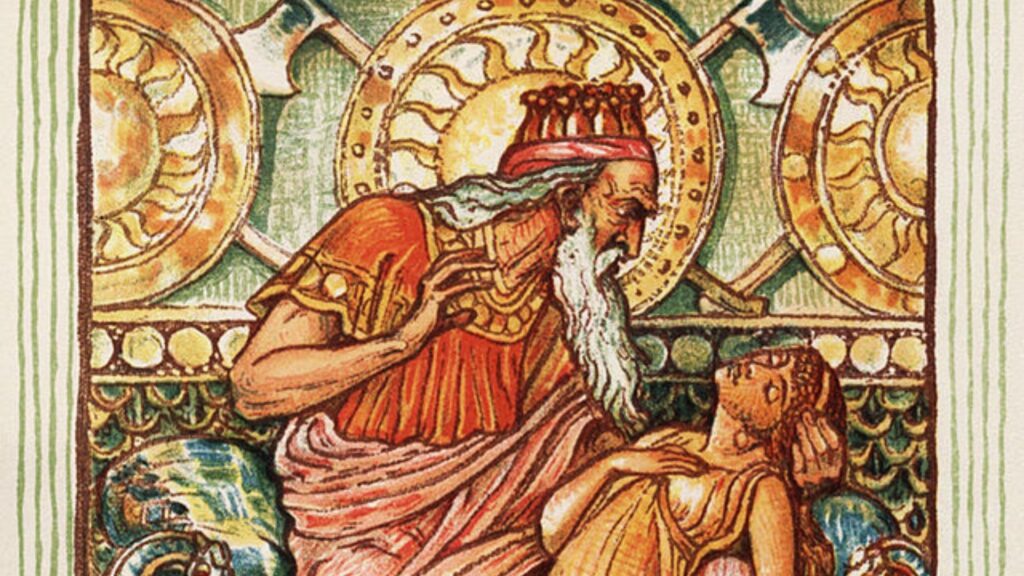
Midas is widely known today for the myth of his “Golden Touch” that turned everything to gold, a cautionary tale the ancient Greek philosopher Aristotle cited in the fourth century B.C. as an example of greed. But Midas was also a real king of Phrygia who lived in the eighth century B.C. The ancient Greeks thought he was fabulously wealthy, and evidence supports this: ornate metalwork, jewelry, pottery, rare wooden furniture, and traces of fine textiles have been discovered in several Phrygian royal tombs.
More Than 120 Burial Mounds Surround Gordion

There are more than 120 burial mounds near Gordion, of which about half have been investigated. The tomb of Midas himself, however, has not yet been found. Rose told Live Science that the newly discovered tumulus is “unique in that it contains graves spanning a period of nearly three millennia.” The site includes burials from an ancient cemetery that predated the Phrygian construction, along with later burials added after the mound was built. “Especially welcome is the information that it dates to the reign of King Midas,” he said.
One Expert Questions Whether the Bronze Vessels Indicate Royal Ties

Not all archaeologists agree that the situlas prove royal connections. Maya Vassileva of the New Bulgarian University in Sofia, who was not involved in the study, told Live Science the Karaağaç Tumulus is “very important evidence” for an elite Phrygian burial far from Gordion. However, she questioned the interpretation of the bronze vessels. “I would not consider the presence of situlae as evidence for a local royal status or royal ties,” Vassileva said. “The other suggested hypothesis for an elite gift exchange seems more plausible.”
The Burial May Represent a Royal Gift Exchange With a Governor

Erpehlivan acknowledged the tomb’s lavish grave goods might not definitively indicate a royal burial. The artifacts could instead represent a royal gift exchange with an important person who had regal connections, such as the area’s governor. Either interpretation supports evidence for distributed political power across Phrygia, suggesting the kingdom maintained relationships between the capital and distant regions through ceremonial exchanges and strategic appointments rather than strict centralized control from Gordion alone.
PetsFanatic Team
Pet Care Expert & Content Creator
Passionate about sharing knowledge and tips for better pet care. Writing about everything from pet health to training techniques.