
Archaeologists Uncovered a 2,400-Year-Old ‘Sacrificial Complex’ in Russia

Archaeologists working in Russia’s southern Ural Mountains have uncovered what they’re calling the richest “sacrificial complex” of its kind ever found. Hidden between ancient burial mounds, the site contains hundreds of artifacts linked to ritual activity carried out nearly 2,400 years ago. The discovery is offering rare insight into how nomadic elites honored their dead; not just once, but repeatedly.
The find was made at Vysokaya Mogila, a vast necropolis used between the fourth and third centuries B.C. While burial mounds themselves are common at the site, what lay between them proved far more surprising: carefully placed caches of objects tied to sacrifice, ceremony, and status.
Researchers say the discovery reshapes how they understand these ancient cemeteries suggesting they functioned as long-term ritual landscapes rather than simple resting places for the dead.
What makes this site so unusual
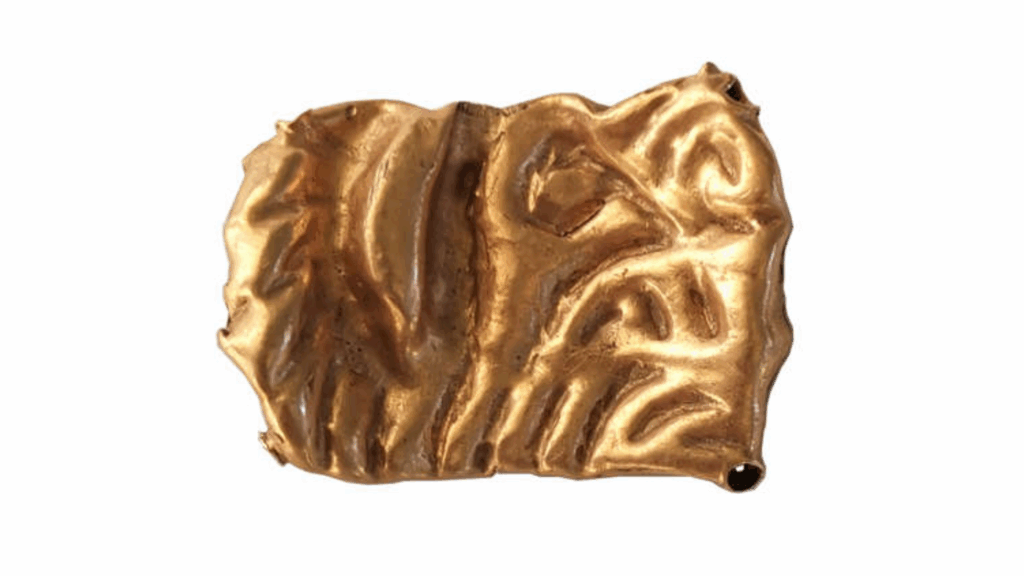
Excavations between the burial mounds revealed several artifact caches totaling more than 100 objects, along with over 500 bronze beads. Many items were associated with horseback riding; a key marker of power and identity among nomadic groups of the region.
One cache contained a gold applique plaque shaped like a tiger’s head and forepaw. Another held fragments of a bronze ladle and cauldron. These items were not randomly scattered but deliberately deposited, hinting at ritual intent rather than everyday loss.
Most striking, however, was a shallow circular pit west of one burial mound — a concentrated “sacrificial complex” filled with objects unlike anything previously documented in the region.
Inside the richest sacrificial complex ever found

Inside the pit, archaeologists uncovered bronze browbands, cheek pieces, and iron bits representing at least a dozen horse bridles. These weren’t plain tools. Many were richly decorated with metal discs showing birds, mythical creatures, human faces, and geometric designs.
The complex also contained a wooden bowl lined with silver overlays depicting animals, a luxury item that likely played a role in ceremonial offerings. Alongside it were the jaws of a boar, carefully arranged as a sacrificial animal.
Researchers believe many of the objects were imported from distant regions such as the northern Caucasus and the northern Black Sea. Their presence here is unprecedented, underscoring the wealth and far-reaching connections of the nomadic elites who used the site.
More than graves, these were ritual gathering places

The silver-lined bowl and animal remains point to post-funeral ceremonies carried out long after burials were complete. Archaeologists suggest these rituals were likely performed by high-status nomadic nobles, reinforcing social bonds and honoring ancestors.
Rather than isolated events, the findings indicate repeated visits to the necropolis. The spaces between mounds became stages for ritual activity, transforming the cemetery into a living ceremonial landscape over generations.
For researchers, the discovery challenges long-held assumptions about ancient burial sites in the southern Urals. Vysokaya Mogila was not just a place of death; it was a center of memory, power, and ritual. And with the richest sacrificial complex of its kind now uncovered, archaeologists believe the site still has more stories to tell.
PetsFanatic Team
Pet Care Expert & Content Creator
Passionate about sharing knowledge and tips for better pet care. Writing about everything from pet health to training techniques.