
16th Century Imperial Shipwreck Found, With Over 900 ‘Priceless, Astonishingly Intact’ Treasures Inside
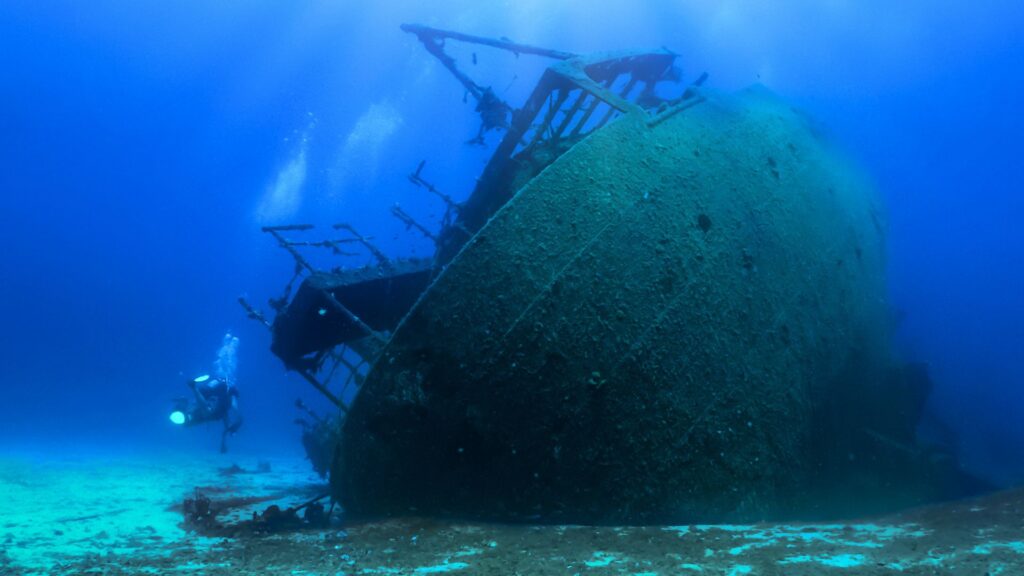
Off the southern coast of Hainan Island, two ancient shipwrecks have rested in near-complete darkness for over 500 years. Discovered in October 2022 at a depth of 1,500 meters, they sat undisturbed on the South China Sea floor until a team of Chinese archaeologists decided to bring their secrets back to the surface.
A Mile Below the Surface, Two Vessels Waited

The two wrecks sit roughly 14 miles apart, about 93 miles southeast of Hainan. At 1,500 meters deep, nearly a mile below sea level, they are among the deepest archaeological sites ever excavated in Chinese waters. The extreme pressure and darkness that hid them for centuries also helped preserve them in remarkable condition.
Two Ships, Two Different Stories

Both vessels belong to the Ming dynasty (1368-1644), but they appear to have sailed during different reigns. One is linked to Emperor Zhengde’s era (1505–1521), the other to Emperor Hongzhi’s (1487–1505). Their cargoes are strikingly different, a detail that researchers say is key to understanding what they carried and where they were headed.
The Haul From Ship No. 1

China’s National Cultural Heritage Administration confirmed that 890 artifacts were pulled from the first wreck, the larger of the two. Among them: porcelain, pottery, and copper coins. Archaeologists believe Shipwreck No. 1 was an outbound vessel, likely carrying goods from China’s interior to markets in Southeast Asia when it sank.
The ‘Strange’ Contents of Ship No. 2
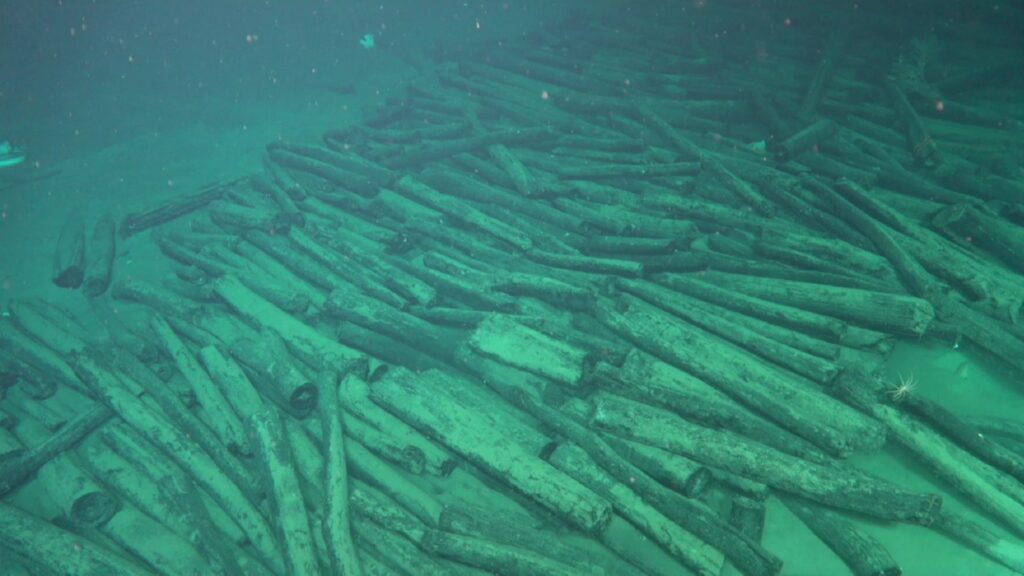
The second wreck told a different story. Only 38 artifacts were recovered, but they were unlike anything from Ship No. 1. The haul included waterlogged ebony logs, turban shells, deer antlers, and a small collection of ceramics. These were not export goods — they were imports, likely sourced from ports across the Indian Ocean on a return voyage to China.
Why Deer Antlers Were Aboard a Trade Ship

Deer antlers, turban shells, and tropical hardwoods like ebony were valuable commodities in Ming China. Antlers were prized in traditional medicine. Shells were used in decorative crafts. Ebony, dense and dark, was sought for fine furniture. Their presence suggests the ship was returning from a port somewhere in the Indian Ocean region.
Life During the Ming Dynasty

The Ming dynasty was one of China’s most prosperous eras. Its population doubled, its cities grew, and its emperors oversaw an explosion in trade and artistry. China exported silk, porcelain, and crafts, and imported food, raw materials, and exotic goods. The two shipwrecks are physical relics of a moment when China was deeply connected to the wider world.
Jingdezhen: The City That Built an Empire of Porcelain

Many of the ceramics from Shipwreck No. 1 are believed to have come from Jingdezhen, a city in China’s Jiangxi province that served as the imperial hub for porcelain production. Known for its distinctive blue-and-white designs, Jingdezhen’s kilns supplied both the royal court and the overseas trade market during the Ming period.
Blue and White, and Built to Travel

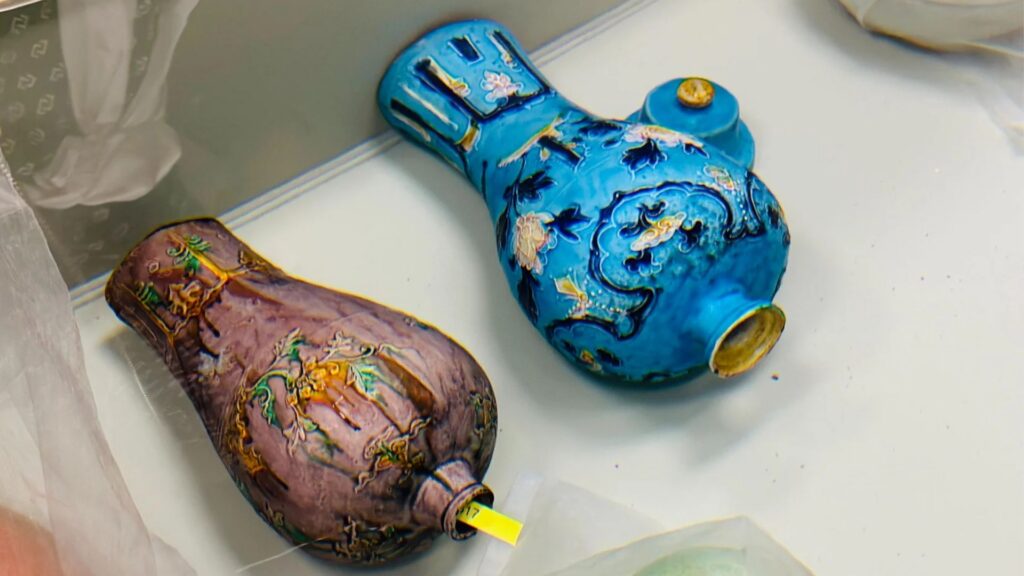
What made Jingdezhen ceramics so valuable abroad? Their quality, consistency, and visual appeal. Centuries underwater, their glazes and painted decorations remained astonishingly intact. The blue-and-white style — cobalt pigment under a clear glaze — was admired from Southeast Asia to the Middle East. Pieces from these kilns have been found in archaeological sites across the Indian Ocean world, suggesting a vast, organized distribution network.
The Ancient Maritime Silk Road

Long before European ships dominated global trade, China ran its own ocean corridors. The Maritime Silk Road linked Chinese ports to Malacca, Ceylon, and western India. Both shipwrecks appear to have traveled this route. One heading out and one heading home. They’re the physical proof of an intercontinental trade system that flourished centuries before the modern era.
The Robot That Dived to the Bottom

To reach the wrecks, archaeologists used the Shenhai Yongshi, or “Deep Sea Warrior”, a Chinese-built manned submersible designed for extreme depths. Equipped with flexible robotic arms, high-definition cameras, and precision controls, the craft enabled researchers to retrieve delicate artifacts from the seafloor without disturbing the wreck sites’ structural layout.
Mapping a Shipwreck 500 Years in the Making

The excavation team also deployed 3D laser scanners and high-definition underwater imaging to document the wrecks before anything was touched. This approach allowed scientists to build a precise map of how objects were arranged on the seafloor, how cargo was loaded, and what may have happened when each vessel sank.
The Timber That Was Still in Rows

One of the most telling finds was how the timber aboard Shipwreck No. 2 was still stacked in organized rows on the seafloor. Archaeologists interpreted this as a sign that the ship had sunk shortly after loading — its cargo barely disturbed. Five centuries underwater, yet the arrangement of the logs spoke clearly about the final moments before it went down.
What Officials Said About the Significance

Guan Qiang, deputy head of China’s NCHA, described the discovery as proof that Chinese ancestors navigated and used the South China Sea for trade and cultural exchange. He called the two wrecks “important witnesses” to China’s role in the ancient Maritime Silk Road. Officials framed the find as both a scientific milestone and a point of national historical pride.
Over 10,000 Artifacts Still on the Seabed

The 900-plus artifacts brought to the surface represent only a fraction of what remains below. Archaeologists estimate more than 10,000 objects still rest on the seafloor at Shipwreck No. 1 alone — fragments of ceramics numbering over 100,000. Future recovery efforts will depend on logistics, conservation planning, and the environmental risks of disturbing what has survived this long.
Porcelain With Its Original Glaze

Perhaps the most extraordinary detail of the find is the condition of the ceramics. After more than 500 years at the bottom of the sea, many pieces retained their original glazes and painted decoration. The cold, dark, pressurized environment of the deep ocean acted almost like a vault, locking the artifacts in a state of near-perfect preservation.
A Window Into How Ming China Traded
The diversity of the recovered cargo gives archaeologists a direct look at how trade was organized in early 16th-century China. Exported porcelain was produced to consistent standards, hinting at quality control for foreign buyers. Imported materials were rare, organic, and medicinal in nature. Together, the two ships describe a system of exchange that was structured, bilateral, and far-reaching.
PetsFanatic Team
Pet Care Expert & Content Creator
Passionate about sharing knowledge and tips for better pet care. Writing about everything from pet health to training techniques.