
12,000-Year-Old Oregon Discovery Predating Egypt’s Great Pyramid Suggests Early Americans Were ‘Far More Advanced’
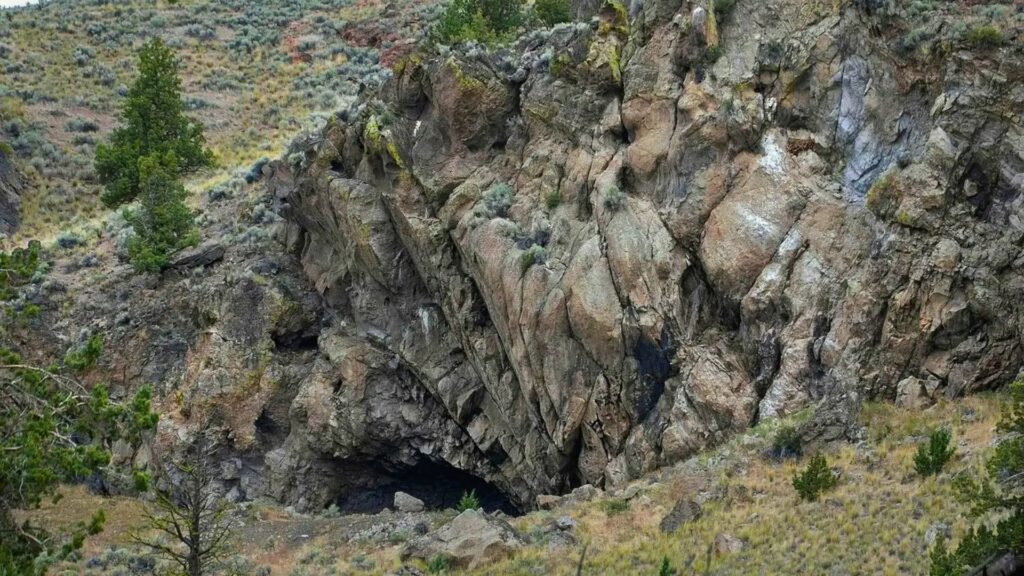
A cave in Oregon has just handed archaeologists something extraordinary: the oldest known pieces of sewn clothing ever found. Stitched together from animal hide roughly 12,000 years ago — at the tail end of the last Ice Age — these fragments suggest that early Americans were crafting tailored garments thousands of years before ancient Egypt’s builders ever laid the first stone of the Great Pyramid. History, it turns out, may need a rewrite.
The discovery centers on Cougar Mountain Cave in Oregon’s Great Basin, a high-desert rock shelter that preserved the artifacts through millennia of dry conditions. Researchers led by archaeologist Richard Rosencrance of the University of Nevada, Reno, re-examined a collection of 55 objects using modern radiocarbon dating and taxonomic identification. What they found confirmed the items dated between 12,060 and 12,620 years ago, well before Egypt’s pyramids, which were built between 1,700 and 2,700 BC.
The study, published in Science Advances in February 2026, identified two small pieces of elk hide stitched together with cord made from twisted plant fibers and animal hair. Also found alongside them: braided cords, knotted bark, bone needles, wooden trap parts, and baskets. The picture that emerged wasn’t of simple cave dwellers. It was of skilled, resourceful people adapting to extreme cold with sophisticated tools and fashion.
How a 1958 Amateur Dig Became One of Archaeology’s Biggest Finds

The story of this discovery begins not in a university lab, but with an amateur archaeologist named John Cowles, who excavated Cougar Mountain Cave on his own in 1958. He kept the items he recovered in a personal collection for decades. After Cowles died in the 1980s, the artifacts were donated to the Favell Museum in Klamath Falls, Oregon, where they sat largely unexamined for years. Their true age and significance unknown.
It wasn’t until Rosencrance’s team applied modern laboratory techniques that the collection revealed its secrets. Radiocarbon dating pinpointed the sewn hide to the Younger Dryas, a period of sudden global cooling between 12,900 and 11,700 years ago, when temperatures dropped sharply after the Ice Age had already begun to thaw. The timing matters: surviving that climate without advanced gear would have been nearly impossible.
Additional artifacts were recovered from nearby sites, including Paisley Caves and Connley Caves in central Oregon, where some of the earliest bone needles ever found were uncovered. Together, these sites paint a picture of hunter-gatherer communities spread across the region — all sharing similar, surprisingly advanced skills in textile and tool production.
What the Stitching Tells Us About Ice Age Survival

The elk hide itself is remarkable in its preparation. Before being sewn, it was cleaned and de-haired, suggesting a deliberate, multi-step process. Rosencrance was direct about what the stitching proves: “They are definitely sewn, because we have cordage sewn into a hide that comes right out and goes into another piece of hide.” Researchers believe the piece was likely part of a tight-fitting coat, shoe, or bag — the kind of garment designed to insulate without restricting movement.
That distinction matters more than it might seem. Loose animal hides draped over the body offered minimal protection from extreme cold and couldn’t prevent hypothermia in the way that fitted, stitched clothing could. The study notes that by 45,000 years ago, modern humans became the only hominins capable of living permanently above 45°N latitude, a feat that required what researchers called “thermoregulatory and complex food-acquisition technologies.” Sewn clothing was central to that survival.
Bone needles found at Cougar Mountain Cave and nearby sites support the idea that sewing was a practiced skill, not an accident. Interestingly, bone needles appear to have been more common during the Pleistocene and declined as temperatures warmed, suggesting that tailored garments were a direct response to the climate crisis of the Younger Dryas, not simply a cultural trend. Necessity, it seems, really was the mother of invention.
A Discovery That Changes What We Know About Early Americans

For decades, the dominant image of Ice Age Americans was of basic hunter-gatherers — resourceful, yes, but not particularly sophisticated by the standards of later civilizations. This find challenges that assumption head-on. As the Science Advances study puts it, the artifacts “reveal specialized Late Pleistocene adaptations,” a clinical way of saying these people were far more capable than we gave them credit for.
Researchers could not say with certainty whether the sewn hide was clothing, a bag, or part of a shelter. But the combination of elk and bison hide strips, bone needles, and intricate cordage leaves little doubt that the people of Cougar Mountain Cave were engaged in deliberate, skilled fabrication. “We already knew they did,” Rosencrance told Gizmodo. “We just had to assume and guess what they were like.”
The broader implications reach beyond clothing. As the researchers wrote, while the origin of clothing is tied to the body’s physical limitations, “its function as a social and cultural mechanism is also critical to the history of humanity.” What was found in an Oregon cave is an evidence that human ingenuity, creativity, and cultural complexity were already well underway long before the pyramids rose from the Egyptian sand.
PetsFanatic Team
Pet Care Expert & Content Creator
Passionate about sharing knowledge and tips for better pet care. Writing about everything from pet health to training techniques.