
10-Foot-Tall Giant Skeletons Found in Nevada Cave

As stories circulate about the “Ginger Giants” found in a Nevada cave, there has been much discussion online and in the scientific community as to the truth behind these 10-foot-tall skeletons. Did giants really live among us? Here are the facts.
Lovelock Cave

The cave at the heart of these claims is Lovelock Cave, located in northern Nevada near the Humboldt Sink. It became famous in the early 1910s during guano mining operations which revealed a treasure trove of ancient human remains and artifacts. Because the cave preserved organic materials well, it has been a main attraction and area of study for fascinated archeologists.
Claims of Giants
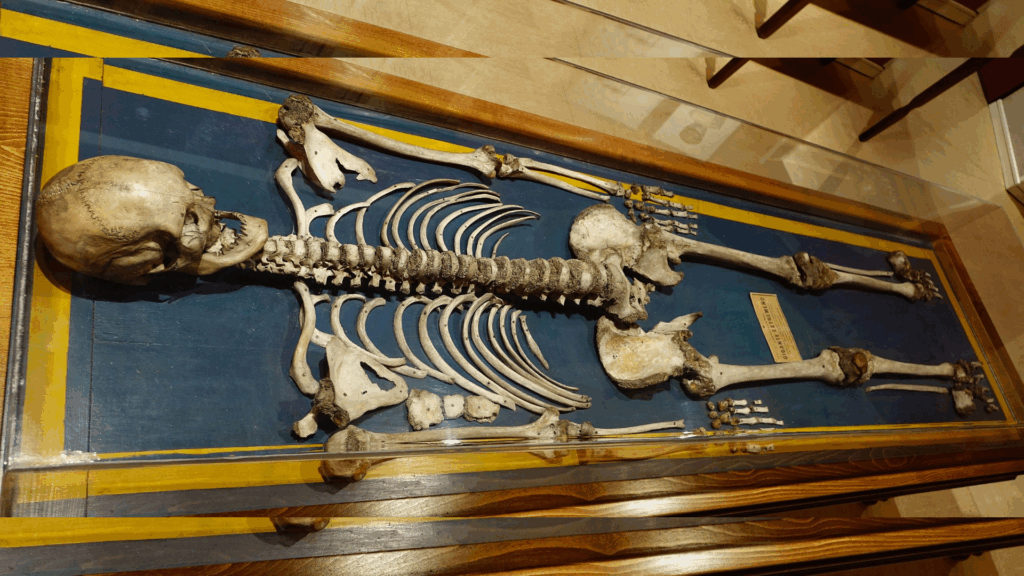
Local reports claimed that miners unearthed 8 to 10-foot-long skeletons with a 15-inch sandal and enormous handprints etched into the stone in the early 1900s. These accounts blended into a Paiute legend of the Si-Te-Cah; a red-haired tribe that earned the name “Ginger Giants”.
Historical Evidence

Excavations in 1912 and 1924 recovered thousands of artifacts from Lovelock Cave including tools, baskets, sandals, and skeletal remains. However, the human remains that were in-tact enough to be reliably measured fell within more typical height ranges. While early accounts dramatized size, archival records suggest many original reports were exaggerated or ambiguous. However, fascination continued.
Myth vs. Science
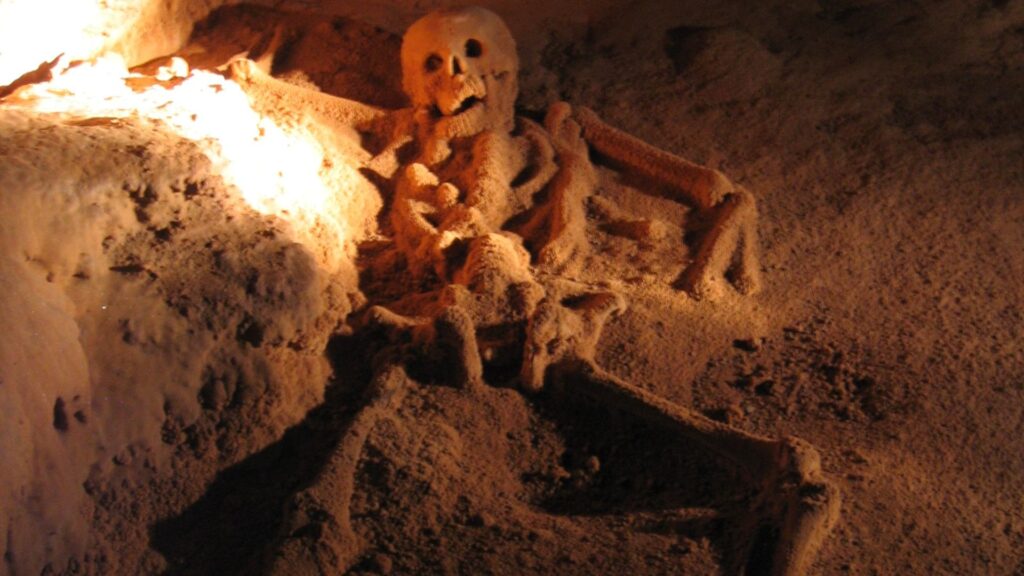
The Paiute’s legend details a violent group of red-headed giants, which has fascinated mystery-lovers and historians for years. However, anthropologists caution that storytelling tends to build and dramatize over generations. They explain that some of the original claims of enormous skeletons might have been a result of misidentifying large animal bones or exaggerating local lore.
Skeptic’s View

Skeptics argue that much of the giant narrative stems from early tourist promotion, or loose retellings rather than physical proof. Some “giant” bones might actually be from cave bears, mammoths, or other animals with large limbs. Established anthropological reviews cannot confirm skeletons of ten-foot human proportions.
Hair & Coloring

Red hair is frequently cited in these stories as evidence supporting the giants’ uniqueness. Yet scientific analysis indicates that decomposition, mineral staining, and soil chemistry can turn dark hair reddish or orange over time. In other words, red hair in ancient remains isn’t a reliable indicator of a distinct giant race.
Modern Reassessment

More recent studies approach Lovelock Cave with caution, emphasizing the importance of verified data over folklore. Studies show the confirmed human skeletons from the site match regional populations in height and morphology. The role of myth, local legend, and sensationalism has greatly impacted how the site is interpreted and analyzed.
Popular Fascination

Despite academic restraint, the idea of giants in Nevada persists in pop culture, documentaries, and internet conversations. The merging of Indigenous stories, dramatic early reports, and modern mythmaking keeps the narrative alive. Whether fact or fiction, it continues to spark fafscination and debate.
Conclusion

The claim of 10-foot skeletons in a Nevada cave makes for a compelling tale, but the evidence falls short of confirmation. Nevertheless, there is still much history to be studied at LockLock cave with fascination and hopes of learning more about ancient life.
PetsFanatic Team
Pet Care Expert & Content Creator
Passionate about sharing knowledge and tips for better pet care. Writing about everything from pet health to training techniques.