
Urgent Warning Issued as Multiple ‘Floating Terrors’ Wash Up on Beach

Beachgoers in Wales got an unexpected surprise when several Portuguese Man O’ War washed up on Aberavon Beach. These eye-catching creatures look like jellyfish, but they pack a sting that can send anyone rushing for help. The Port Talbot Coastguard has asked visitors to stay alert and steer clear of the “floating terrors.” Even washed-up ones can sting, so hands off and feet up when walking the sand near the shore.
Sightings Spark Safety Alert on Welsh Beach

Several Portuguese Man O’ War have washed up on Aberavon Beach in Wales, prompting an urgent safety warning from the Port Talbot Coastguard. The creatures, often mistaken for jellyfish, can still sting even when they appear lifeless. Locals and visitors have been asked to stay alert and keep a safe distance. The alert comes after more sightings along nearby coastlines, so people heading to the beach are being reminded to take extra care near the water.
Coast Guard Urges Public to Stay Cautious

The Port Talbot Coastguard has urged everyone visiting Aberavon Beach to stay cautious after the sightings of Portuguese Man O’ War. People have been told not to touch the creatures, even if they look dead, because their tentacles can still sting. The Coastguard reminded beachgoers to call 999 in any coastal emergency and ask for help. They also shared that anyone stung should rinse the area with seawater and get medical attention right away.
Why the Portuguese Man O’ War Isn’t a Jellyfish

Many people think the Portuguese Man O’ War is a jellyfish, but it’s actually a siphonophore. That means it’s made up of smaller organisms that work together as one. Each part has its own job, from feeding to floating to stinging. The creature’s translucent, balloon-like body helps it drift across the water, and its long tentacles trail behind. So it may look like a single animal, but it’s really a colony working in sync.
How the Creature Delivers Its Painful Sting
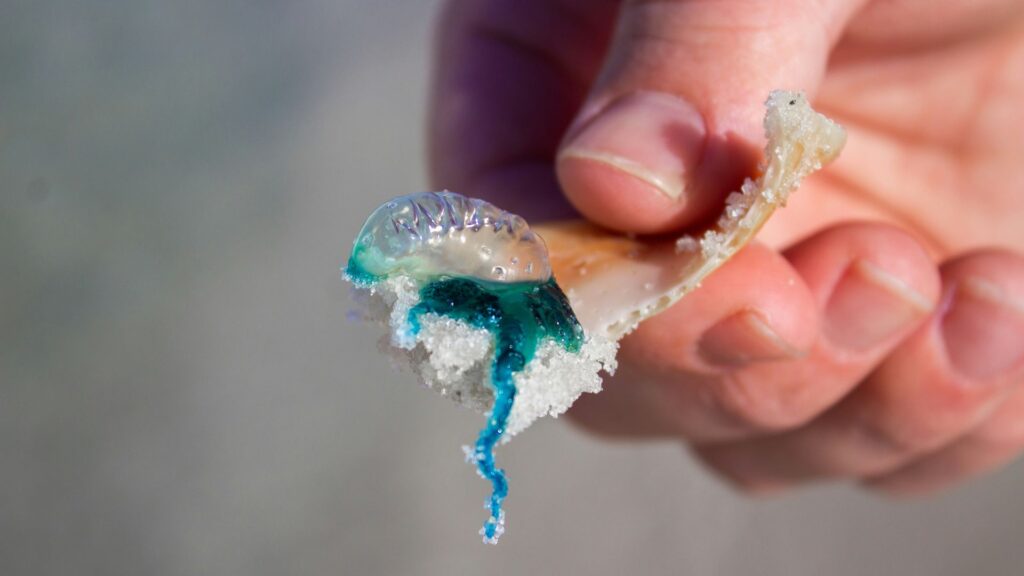
The Portuguese Man O’ War has long tentacles that pack a powerful sting. They release venom-filled cells that stick to skin and cause red welts or blisters. Some people also feel pain that spreads quickly, and in rare cases, the sting can trigger fever, shock, or heart issues. The reaction depends on how much venom gets released. Even a quick brush against the tentacles can leave a lasting sting, so staying cautious near the water matters.
Dangers Linger Even After It Washes Ashore

Even when the Portuguese Man O’ War washes up and looks lifeless, it can still sting. The tentacles hold venom long after the creature dies, so touching one can still cause pain or skin irritation. People walking along the beach might mistake it for harmless jellyfish remains, but it’s safer to leave it alone. The Coast Guard reminded everyone that even detached tentacles in the sand can sting, so it’s best to keep a safe distance.
What to Do If You’re Stung on the Beach

Getting stung by a Portuguese Man O’ War can hurt, so quick action helps. The Coast Guard says to rinse the area with seawater, not fresh water, and gently remove any tentacles using something like a credit card. Hot water can help ease the pain, so soak the sting for about half an hour if possible. It’s also smart to contact a doctor or HM Coastguard right away for help, especially if symptoms worsen.
Coast Guard Explains Cleanup Procedure

The Coastguard shared that they won’t be removing the Portuguese Man O’ War from Aberavon Beach. They said the tide usually carries the creatures back out to sea on its own. That approach is standard whenever one washes ashore, since moving it can still be risky. Locals were reassured that monitoring continues, so if another sighting happens, the Coast Guard will step in again to warn visitors and keep everyone aware of beach safety.
Rising Sightings Reported Along the Welsh Coast

Sightings of Portuguese Man O’ War have been popping up more often along the Welsh coast. In September, one was spotted on the Pembrokeshire shoreline, and another was seen at Freshwater West Beach by a local photographer. Reports also came from beaches in Gwynedd and Anglesey. The rise in sightings has locals paying closer attention to what’s washing ashore, so visitors have been urged to stay alert when walking near the water.
Staying Safe on the Shore

Anyone heading to the beach should keep an eye out for any washed-up Portuguese Man O’ War. They may look harmless, but even a single touch can sting. So skip the curiosity check and keep your distance. If you spot one, let the Coastguard know and alert others nearby. Staying aware keeps everyone safe, so enjoy the sand and waves, but give these “floating terrors” plenty of space to drift away.
PetsFanatic Team
Pet Care Expert & Content Creator
Passionate about sharing knowledge and tips for better pet care. Writing about everything from pet health to training techniques.