
Student’s Curiosity Leads to Megalodon Discovery

A McGill University student’s curiosity about ancient sharks just led to a rare discovery. Graduate student Louis-Philippe Bateman found that megalodons, the massive prehistoric predators, once swam near Canada. What began as a fascination with ancient tales of giant shark teeth evolved into tangible scientific evidence. His research connects a teenage interest to a find that adds a surprising new piece to Canada’s prehistoric past.
Curiosity Sparks a Scientific Journey

Louis-Philippe Bateman’s interest in ancient sharks began when he read about large fossilized teeth pulled from Canada’s Atlantic coast. That story stayed in his mind for years, so when he entered McGill University, he decided to learn more. His curiosity turned into research that revealed a discovery no one had confirmed before. The teeth belonged to the massive megalodon, proving that the ancient predator once swam in Canadian waters.
Tracing Shark Teeth from the 1960s

The story of the megalodon’s link to Canada started with old records from the 1960s. Fishermen dredging for scallops off the Atlantic coast found massive shark teeth that caught the attention of researchers decades later. Louis-Philippe Bateman learned about those fossils and couldn’t let the mystery go. So he began tracking where they came from, finding clues scattered across museum collections, old journals, and even private collections that held the missing pieces.
From High School Fascination to Research Discovery

Louis-Philippe Bateman’s interest in fossils started back in high school when he came across stories about ancient shark teeth. The idea stayed with him, so when he joined McGill University, he decided to take a closer look. Working with his professor at the Canadian Museum of Nature, he began studying the mysterious fossils again. That curiosity turned into confirmation that the teeth belonged to the massive megalodon, revealing its surprising presence near Canada.
Confirming Canada’s Megalodon Connection
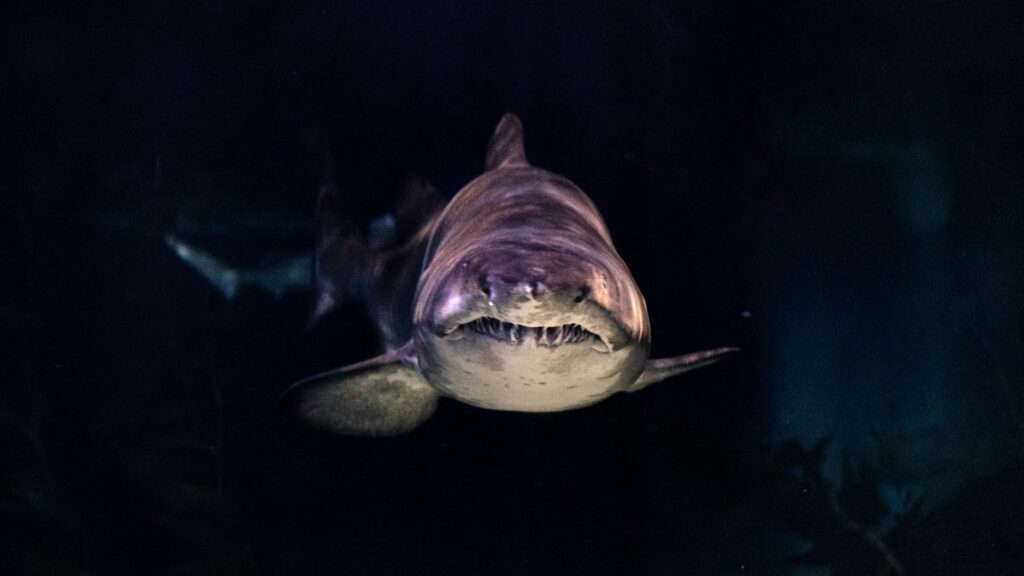
Louis-Philippe Bateman confirmed that the fossilized teeth he studied belonged to an Otodus megalodon, the largest shark species ever known. So Canada officially joined the map of megalodon findings. He analyzed eight teeth at the Canadian Museum of Nature, many of which were recovered decades ago from scallop dredgers near Nova Scotia. The discovery added new context to the prehistoric seas and showed how much more there is to learn from Canada’s ancient coastlines.
The Challenge of Tracking Ancient Fossils

Louis-Philippe Bateman had to piece together clues from different sources to identify the megalodon fossils. Some teeth were kept in museum collections, others appeared only in old fisheries journals or photographs. A few were held by private collectors who hesitated to share them. So his research became part science and part detective work. He compared the characteristics carefully until he confirmed that the fossils matched the prehistoric predator he’d been studying.
Studying Teeth to Identify a Giant Predator

Megalodon teeth have distinct shapes that help scientists tell them apart from other shark species. Louis-Philippe Bateman studied every detail, from size to the sharpness of the edges, to confirm what he found. He said once you see certain combinations of features, it becomes clear what species they belong to. So his careful examination confirmed the fossils came from the massive megalodon, known as one of the largest predators ever to live.
How Climate Shaped Megalodon’s Habitat

Louis-Philippe Bateman’s study also looked at how ancient temperatures influenced where the megalodon lived. The research showed that climate affected its habitat, limiting where it could survive. The species likely preferred warmer waters, which matched what scientists know about its partially warm-blooded nature. So the findings helped explain why fossils turned up near Canada, showing the shark once reached farther north when ocean temperatures were different from what they are today.
A Discovery Inspiring Future Fossil Research

Louis-Philippe Bateman’s discovery sparked a new push to study fossils from Eastern Canada. He noted that many collections still contain specimens that haven’t been examined in decades. So finding megalodon teeth there showed how much more might be waiting to be studied. The work also motivated him to continue researching Canada’s prehistoric past and inspired others to re-examine old discoveries that could still reveal something new.
Curiosity That Keeps Science Moving

Louis-Philippe Bateman’s curiosity didn’t stop at one discovery. His work showed how old findings can inspire new research. He’s already exploring more fossils across Eastern Canada, hoping to uncover more prehistoric clues. His story reminds us that curiosity can spark progress and that even a single question can lead to discoveries that shape how we understand our past.
PetsFanatic Team
Pet Care Expert & Content Creator
Passionate about sharing knowledge and tips for better pet care. Writing about everything from pet health to training techniques.