
Scientists Discover Hydrothermal World Hidden Beneath The Pacific Ocean

Scientists have uncovered a vast hydrothermal system beneath the Pacific Ocean. The area features towering vents and hot springs that release mineral-rich fluids. These vents create unique habitats for strange and colorful marine life.
Researchers used advanced submersibles to map the region and collect samples. The findings show a complex network of underwater structures. Oceans continue to hold mysteries that challenge our understanding of deep-sea environments.
Kunlun System Spans 11.1 Square Kilometers
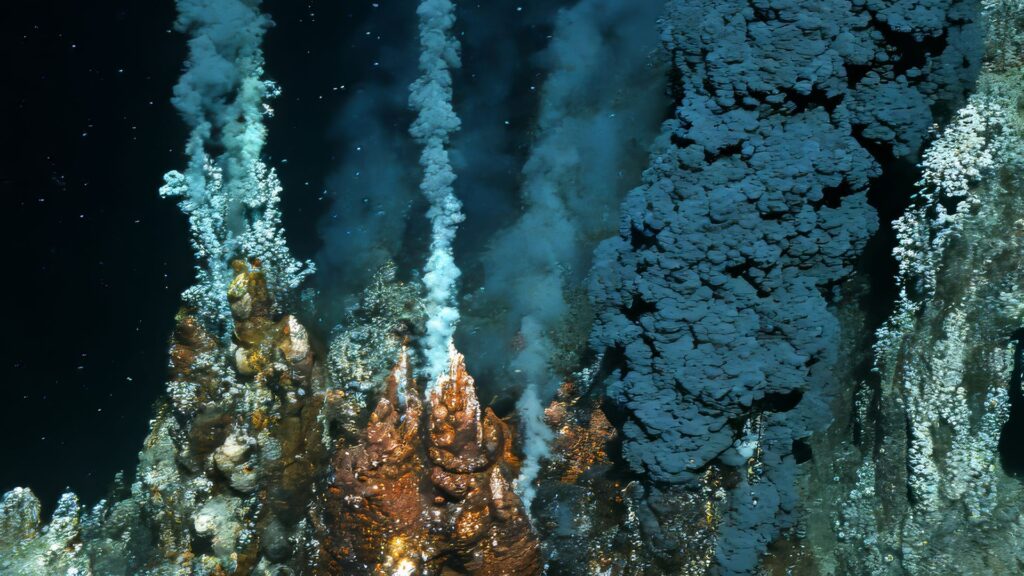
The Kunlun hydrothermal system stretches across 11.1 square kilometers beneath the Pacific Ocean. Scientists mapped towering vents and chimneys that release superheated fluids into the surrounding water. The site hosts a variety of marine life that thrives in extreme conditions. Researchers collected rock and fluid samples to understand the system’s structure and chemical makeup. Its sheer size and complexity make it one of the largest hydrothermal areas discovered in the region so far.
Twenty Seafloor Craters Discovered Near Caroline Plate

Researchers found twenty craters on the seafloor near the Caroline Plate. Each depression stretches across several meters, showing signs of past hydrothermal activity. Scientists collected sediment and fluid samples to learn more about how these craters formed. The area also hosts unusual microbial life that survives in hot, mineral-rich conditions. Mapping the site revealed connections between the craters and nearby hydrothermal vents, giving a clearer picture of how underwater systems shape the ocean floor.
Serpentinization Occurs Without Mid-Atlantic Ridges

Scientists observed serpentinization happening far from the Mid-Atlantic Ridges. This process changes rock into mineral-rich formations and releases hydrogen into the surrounding water. Researchers also noticed unusual microbial activity around these areas, showing life adapts to extreme conditions. Submersibles collected samples to study chemical changes and the environment’s structure. The findings suggest hydrothermal processes can occur in more places than previously thought, so oceans may host more hidden systems waiting to be explored.
System Produces Five Percent Global Abiotic Hydrogen

Researchers found the hydrothermal system generates about five percent of the planet’s abiotic hydrogen. Vents release hydrogen into surrounding waters, creating pockets where microbes can thrive.
Scientists collected water and rock samples to measure chemical levels and understand the reactions happening below the surface. The hydrogen output also connects to mineral formation in the area. The discovery shows how these underwater systems contribute to ocean chemistry, so scientists are eager to study similar sites in other regions.
Olivine Rocks React With Seawater, Creating Minerals

Olivine rocks on the seafloor interact with seawater, forming new minerals as a result. Scientists also observed changes in chemical composition around these areas, so they collected samples to analyze reactions in detail.
The mineral formation influences local water chemistry and creates conditions that support unusual microbial life. Researchers hope studying these reactions helps them understand how hydrothermal systems shape the ocean floor. The process just highlights how active the deep-sea environment really is.
Hydrogen-Fueled Chemosynthesis Supports Marine Life

Researchers observed that hydrogen from hydrothermal vents fuels chemosynthesis, allowing microbes to produce energy without sunlight. These microbes also form the base of the food chain, supporting larger organisms in the area.
Scientists collected samples of water and microbial mats to understand chemical reactions and energy flow. The system just shows how life adapts to extreme conditions. So far, findings reveal a complex ecosystem thriving around vents, offering new insights into ocean biology and chemical processes.
Stable Environment Offers Superior Origins Laboratory

Scientists note that the hydrothermal system provides a stable environment for chemical reactions over long periods. Researchers also observed mineral-rich fluids creating consistent conditions, so they can study how life may have started on Earth. Samples of rocks, fluids, and microbial mats help track reactions and energy flow. The system just acts as a natural laboratory, showing how complex processes can unfold under steady conditions. Findings give new insight into deep-ocean chemistry and early-life possibilities.
Shrimp, Lobsters, Tubeworms Populate Hydrothermal Vents

Hydrothermal vents host communities of shrimp, lobsters, and tubeworms thriving around mineral-rich fluids. Scientists also spotted small crabs and other invertebrates feeding near vent openings, so they collected samples to study how life survives in extreme heat. The vents provide nutrients that support unique ecosystems just meters from boiling fluids. Researchers hope observing these species reveals patterns in deep-sea biology. The diversity shows how vibrant life can exist in environments most would never imagine.
Oceans Still Hold Surprising Secrets

Scientists continue to uncover hidden hydrothermal systems beneath the Pacific Ocean. These vents release hydrogen and minerals that support unusual marine life. Researchers collected samples of rocks, fluids, and microbes to understand chemical reactions and energy flow. Observing shrimp, lobsters, and tubeworms shows life adapts in extreme conditions. Studying these areas also offers clues about early Earth chemistry. So far, the discoveries just remind us how much the ocean still has to reveal.
PetsFanatic Team
Pet Care Expert & Content Creator
Passionate about sharing knowledge and tips for better pet care. Writing about everything from pet health to training techniques.