
Evolution in Real-Time: The Mysterious Growth of the Modern Dog’s Brain

Dogs sit beside us every day, and that closeness feels familiar. Over time, that familiarity can hide quiet changes happening under the surface. One of those changes appears inside the skull, where the modern dog brain shows signs of steady growth. From there, a simple observation opens a larger question about how living alongside people reshapes an animal over generations.
For years, domestication has been linked to smaller brains as survival demands eased. At the same time, new research points in a different direction for today’s dogs. As breeds drift farther from their wolf ancestors, brain volume rises instead of shrinking. From there, the focus shifts toward daily life with humans, where rules, signals, and shared spaces shape behavior in subtle ways.
Modern dogs move through cities, homes, and routines that ask for constant interpretation. Over time, that environment rewards attention to gestures, tone, and expectation. As those pressures accumulate, brain size appears to respond in step. From there, ancient breeds offer a quiet comparison through greater independence and fewer reactions to human cues. As the pattern comes into view, evolution no longer feels distant, since it unfolds in living rooms, sidewalks, and shared moments between people and dogs.
Brain Size Patterns Across Modern Dogs and Wolves

Researchers began by comparing brain volume across a wide range of dogs and wolves. From there, CT scans allowed precise reconstructions from more than 850 dogs spanning 159 breeds alongside dozens of wolves. As that comparison took shape, a consistent pattern emerged linking genetic distance from wolves with gradual changes in brain size.
Dogs with body weights similar to wolves showed smaller brains, landing near three-quarters of wolf brain volume. From there, the pattern aligned with earlier findings tied to domestication, where reduced survival pressures often coincide with reduced brain demands. As the data expanded across breeds, brain size shifted upward in dogs further removed from their wolf ancestors.
That upward shift appeared independent of physical traits or breeding purposes. As measurements accumulated, skull shape, lifespan, litter size, and working classification showed no connection to relative brain volume. From there, the focus narrowed on lineage rather than function, since herding dogs and companion breeds followed the same pattern. As genetic distance increased, relative brain size increased alongside it, forming a steady gradient that linked modern dogs more closely to each other than to their wild relatives.
Social Complexity and Behavioral Shifts in Modern Breeds
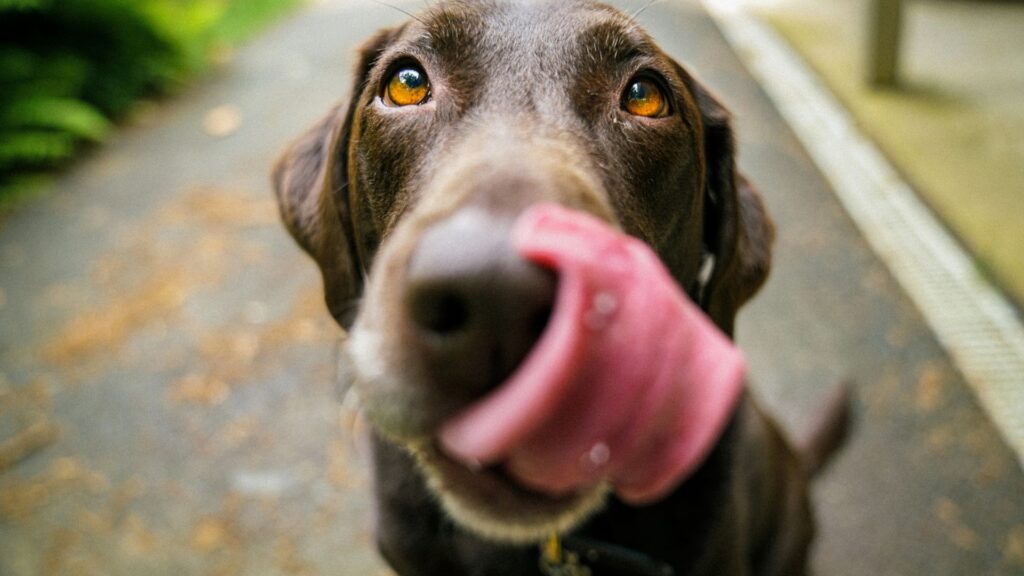
Modern dogs live inside social settings shaped by constant interaction. From there, daily routines place dogs near voices, gestures, and expectations that change throughout the day. As those signals accumulate, dogs learn to read subtle cues tied to tone, posture, and timing.
Over time, that environment favors attention and flexibility. From there, researchers link increased brain size to social demands rather than physical labor or task training. As urban life expands, dogs adapt to shared spaces, structured schedules, and repeated exposure to unfamiliar people. Through that process, behavior shifts toward responsiveness and sustained focus.
Ancient breeds offer a point of reference through greater independence. From there, studies note reduced barking and fewer reactions to human cues among those lineages. As modern breeds show stronger sensitivity to communication, brain volume appears to follow the same direction. Through ongoing exposure to social complexity, behavior and brain structure change together, reflecting how close contact with humans shapes dogs across generations.
Watching Evolution Unfold Beside Us

Modern dogs offer a living record of change shaped by proximity to people. Over time, research shows that brains respond to social exposure in measurable ways. As daily interactions grow more layered, biology adjusts alongside behavior. From there, the study reframes domestication as an ongoing process rather than a closed chapter.
That perspective encourages closer attention to how dogs live today. From there, owners shape environments filled with signals, routines, and expectations that repeat every day. As dogs respond to those patterns, cognition adapts through constant feedback. Over time, shared spaces become settings where evolution continues without pause.
Observing dogs through that lens invites more thoughtful interaction. From there, training, communication, and care gain new context tied to mental engagement. As understanding deepens, choices around enrichment and routine gain clarity. Over time, everyday moments with dogs reveal how closely human behavior and canine biology continue to move together.
PetsFanatic Team
Pet Care Expert & Content Creator
Passionate about sharing knowledge and tips for better pet care. Writing about everything from pet health to training techniques.