
‘Land of the White Jaguar’: Archaeologists May Have Discovered Lost Mayan City In Remote Jungle

Archaeologists trekking through dense jungle in Mexico’s Campeche region believe they’ve uncovered something remarkable. Hidden among thick vegetation, researchers stumbled upon ruins they’ve started calling the “Land of the White Jaguar.” The site features stone structures, plazas, and pyramids that indicate a once-thriving Mayan city. Scientists used aerial mapping to locate the ruins before heading in on foot. Their early findings already hint at a lost settlement waiting to be studied more closely.
Josuhé Lozada Toledo Leads INAH Archaeological Team

Josuhé Lozada Toledo heads the group of researchers from Mexico’s National Institute of Anthropology and History, or INAH. He and his team trekked into the jungle to verify what aerial scans first suggested. They found plazas, pyramid-shaped buildings, and other structures that had been hidden under dense vegetation. Lozada Toledo explained that the site already shows signs of a large settlement, so archaeologists are eager to keep studying what else may be uncovered there.
Lakandon-Ch’ol People Resisted Spanish Conquest

The Lakandon-Ch’ol community lived in this region during the sixteenth century and stood against Spanish forces for decades. Their resistance helped preserve traditions and connections to the jungle long after other areas had fallen. Archaeologists now link the newly found ruins to this history, so the site may offer fresh insight into their way of life. The story of resistance makes the discovery feel even more meaningful, since it ties the ruins to a living heritage.
GIS Technology Maps Lacantún River Bend Location

Researchers relied on GIS technology to pinpoint the site near a bend of the Lacantún River. The mapping work gave them a clear view of structures hidden under the jungle canopy, so they knew exactly where to head once on the ground. The scans showed plazas and pyramid-shaped mounds just waiting to be studied further. Using this approach also saved time in dense terrain, making it possible for archaeologists to reach the ruins more directly.
Diego de Rivas 1695 Letter Provides Historical Clues

A letter written in 1695 by Spanish captain Diego de Rivas mentioned a settlement deep in the jungle. He described temples, stone houses, and plazas that sounded far larger than nearby villages. Archaeologists now see strong connections between his account and the ruins at the Lacantún River bend. So the letter just gave them a historical reference point that lines up with what they’re finding, making the past feel more present through words written centuries ago.
Jataté and Ixcán Rivers Border Discovery Site

Archaeologists pointed out that the newly identified city sits between the Jataté and Ixcán Rivers, so the location had natural boundaries that likely supported settlement. The rivers also made movement and access to resources much easier. Researchers believe this setting helped the city grow in its time. The connection to waterways just adds another layer of context, giving a sense of how the ancient Mayan builders chose their spot with both practicality and survival in mind.
Spanish Forces Renamed City Nuestra Señora de Dolores

When Spanish troops finally settled in the late seventeenth century, they gave it a new name, Nuestra Señora de Dolores. The renaming was part of their effort to impose control, yet the traces of Mayan construction still stand out today. Archaeologists note that Spanish records mentioning the city line up with what they’re now finding in the jungle. So the site connects written accounts with stone evidence, making the story feel much more tangible.
Friar Pedro de la Concepción Found Stronghold in 1695

In 1695, Friar Pedro de la Concepción settled and described it as a stronghold deep in the jungle. His account mentioned stone temples, wide plazas, and defensive walls that suggested a thriving community. The details he left behind just help archaeologists match the ruins with historical references. So his words still matter, since they bridge what people saw hundreds of years ago with what researchers are uncovering in the same location today.
Chicomoztoc Journal Will Publish Research Findings

The findings from the Land of the White Jaguar site will be shared in the academic journal Chicomoztoc. Researchers are preparing their reports so readers can see detailed maps, photos, and descriptions of what they uncovered. Publication also helps connect their work with other studies on Mayan history. It means the story doesn’t just stay in the jungle but reaches classrooms, libraries, and people who follow archaeology. So the research will keep sparking interest well beyond Mexico.
What Comes Next for the Lost Mayan City
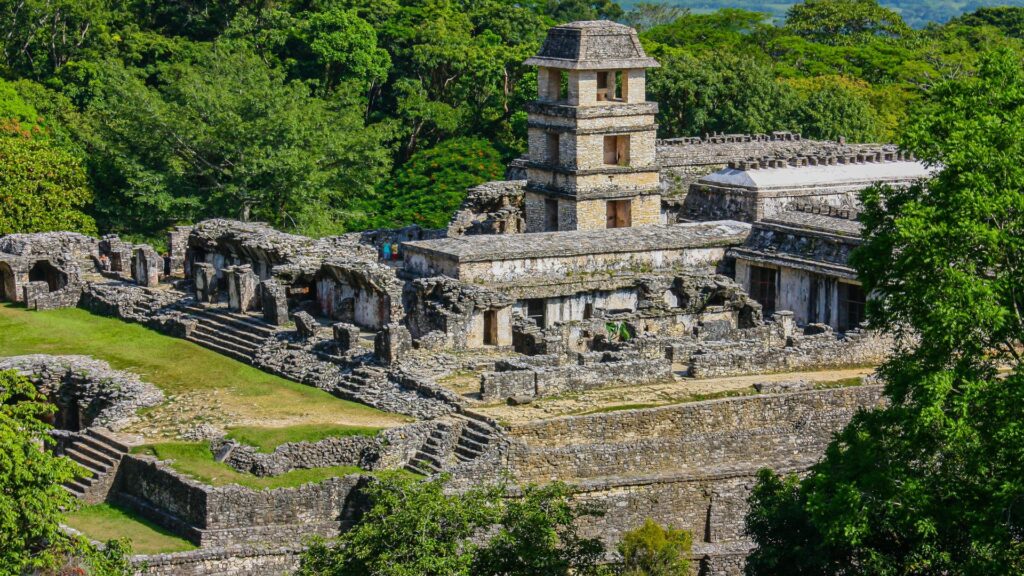
Archaeologists now have a site filled with temples, plazas, and pyramids that’s ready for deeper study. More research will reveal how this settlement fits into Mayan history and daily life. The work is just starting, so future surveys and excavations will keep adding new details. Each find adds another piece to the story of the “Land of the White Jaguar,” and researchers are eager to keep uncovering what still lies hidden in the jungle.
PetsFanatic Team
Pet Care Expert & Content Creator
Passionate about sharing knowledge and tips for better pet care. Writing about everything from pet health to training techniques.